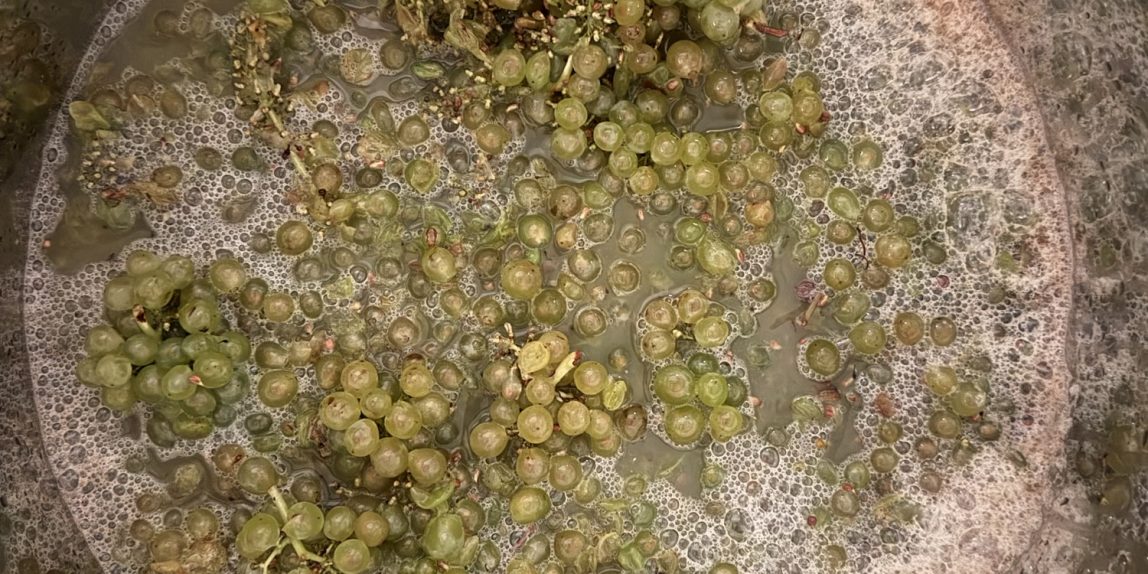
The 2024 Pinot Blanc was still in the demijohn until shortly before I moved out of the garage at the end of spring.
I took my friend and a small manual filling device to move all the wine over to glass bottles that I had ordered, along with old ones that I had cleaned in many steps, taken the labels off and sanitized them.
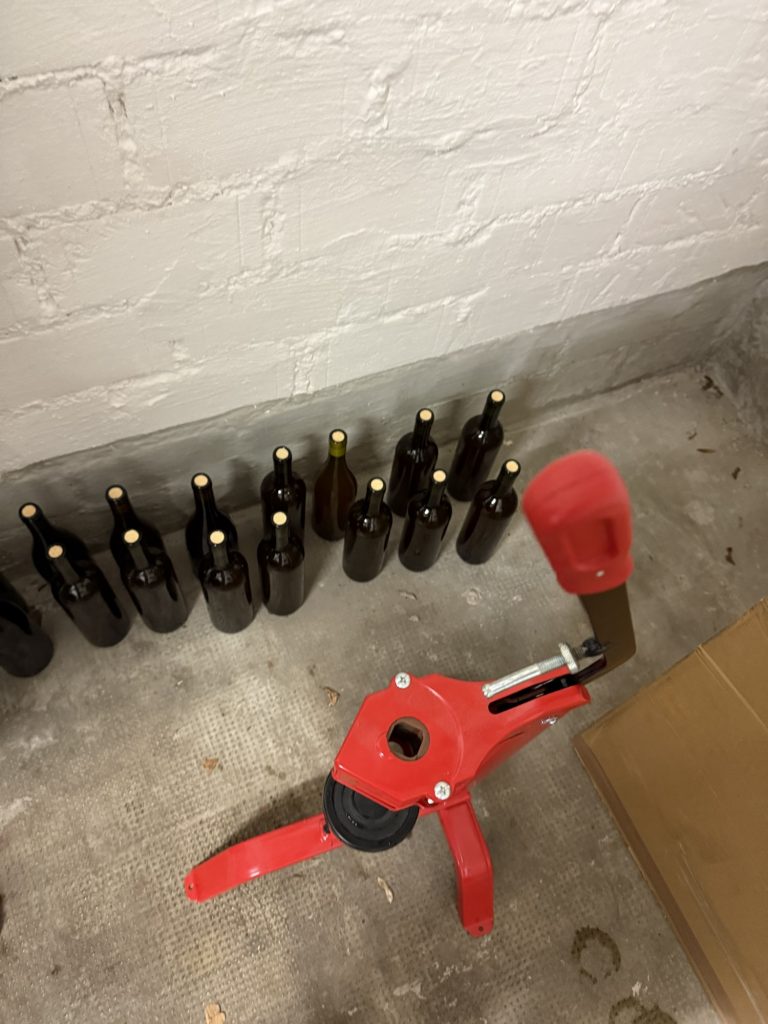
We were done after a short while and corked them directly. It was actually fun, but I was nervous.
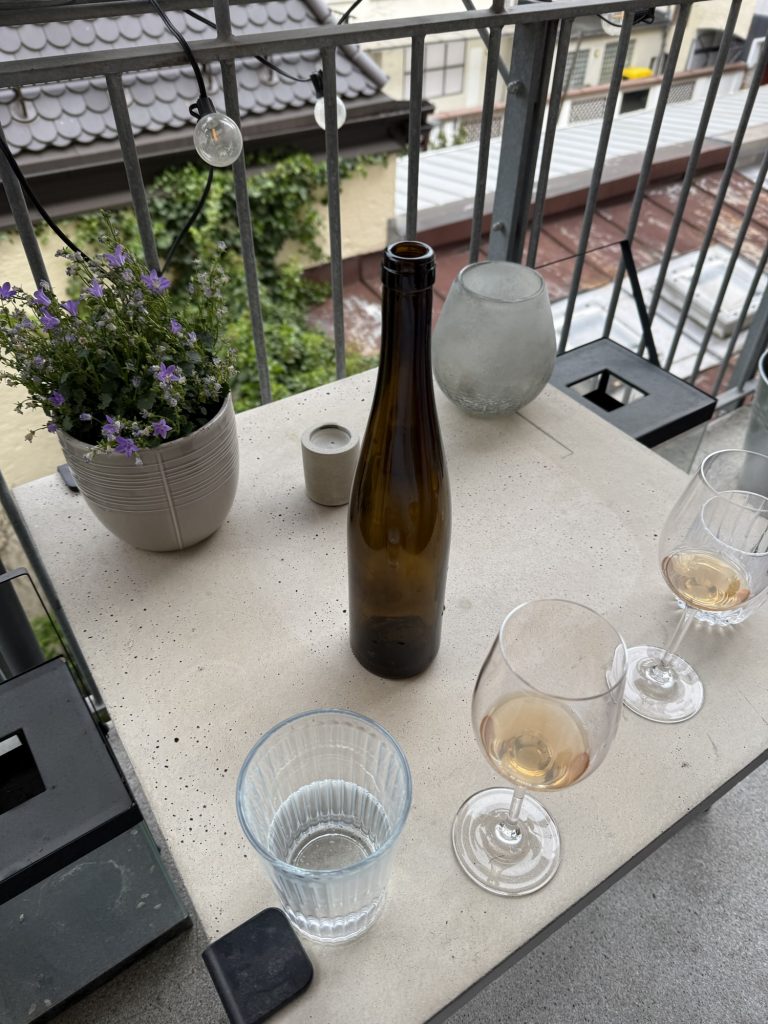
The last bottle was only half-full, so we took it to the balcony and said cheers to it, to the many hours, the heart, the dedication and the efforts that went into it. It was good. A little bit of volatile acidity, but hey, what do you expect when you make a fully natural wine in a garage without any water or temperature control for the first time in your life. The grapes were excellent and that helped me create a decent first vintage. I was beyond proud.
Two months later I met a far friend at a wine bar and brought a bottle with me. He had asked about that wine many times and I thought we might open one together, taste it and maybe also share with the wine bar. What a good opportunity to introduce them to what I had created in the middle of the city!
Cork off, and: terrible smell. Glue, rubber, acid. Terrible. If anyone ever asks what volatile acidity is and how to detect it, I created the perfect sample.
My heart sunk.
I’ll spare you the details. I felt devastated. I tasted two other bottles, one for myself and another one with Horst, who I got my grapes from.
Terrible and undrinkable.
One or the other bottle is actually ok. But about 20 of 24 are undrinkable. I am currently trying to convert it into vinegar. Might be a nice one.
***
This year, in 2025, all grapes were ripe so much earlier. On the weekend following my adventure of bringing swiss pinot noir fruit to my home I hit the road to Franconia. My winemaker friend had already harvested everything except the grapes for ice wine. All vineyeards were empty of grapes. But one row he called the „Anke Zeile“.
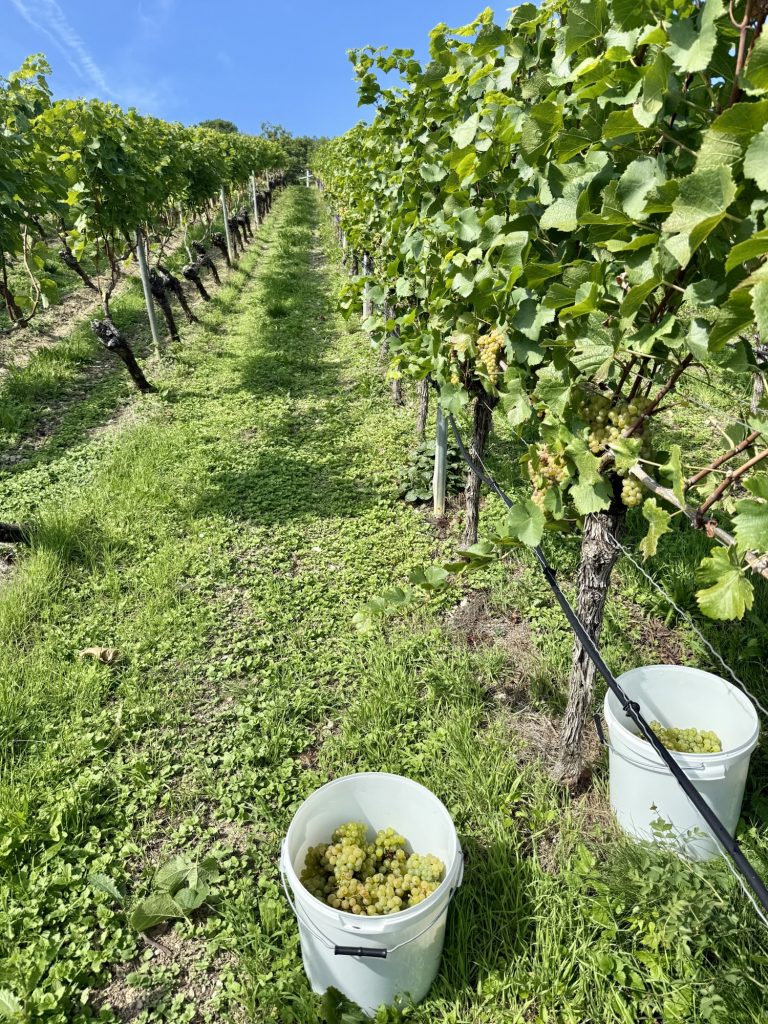
This single row was left with grapes on the vines, on the edge of the pinot blanc plot in a vineyard called Fürstenberg. It was the same vineyard that I had harvested the year before. I wanted to try again and Horst loved my persistence.
The grapes were ripe. Some were stung by insects, some had a little bit of sunburn. I had to focus on taking the good ones only, but I had a full row to myself. It felt much steeper than before. More demanding, more difficult, mixed with higher expectations, from my winemaker friend and from myself. It took forever to harvest the row, and it was almost 29 degrees on that day. Beautiful yet demanding.
After a long morning and drive home I brought all buckets to the cellar, texted my neighbors -you never know- and they actually came to help. With a bottle of champagne (I believe in champagne more than in beer for harvest work) we squeezed all grapes by hand. The two were the best crew I could think of.
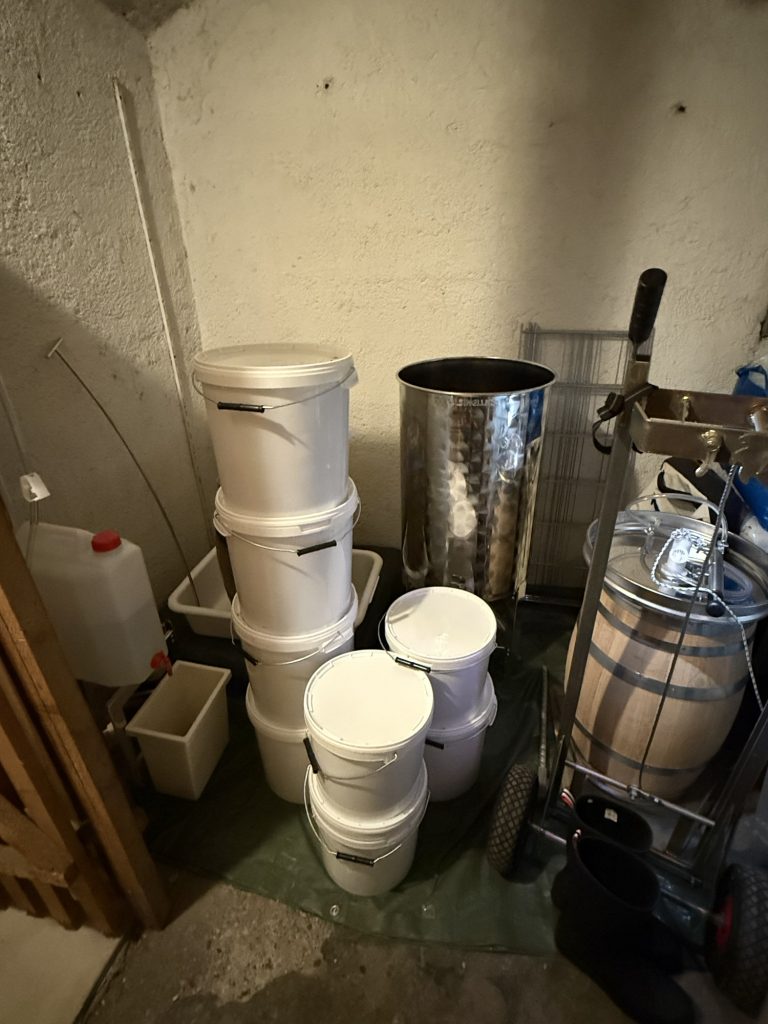
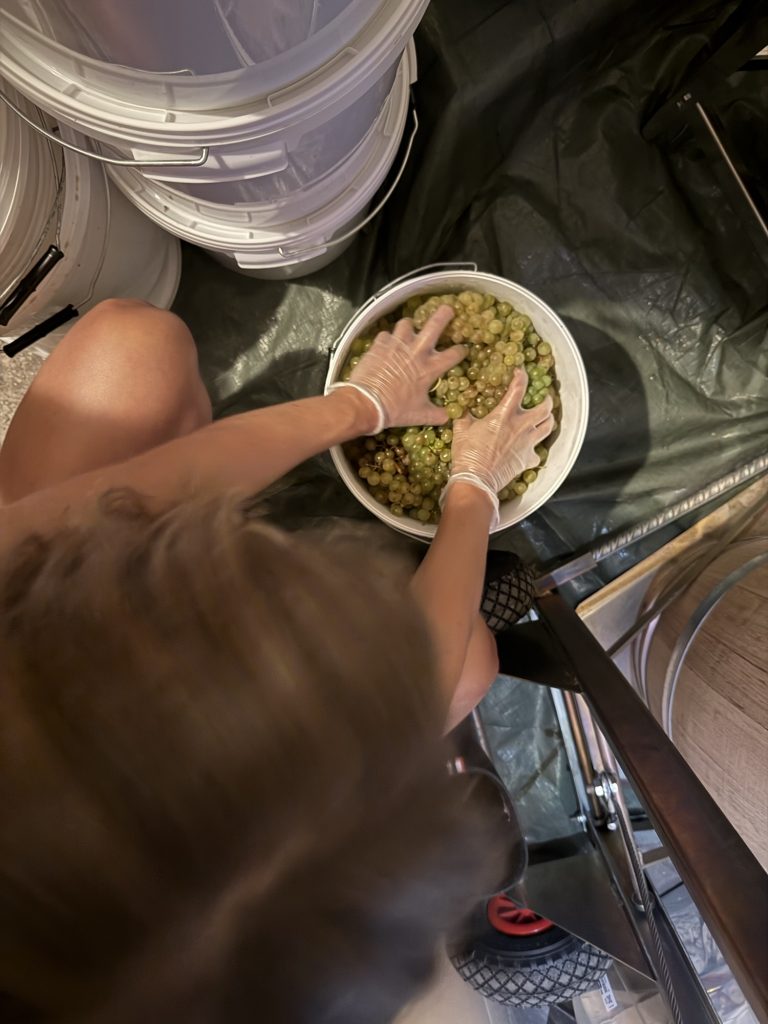
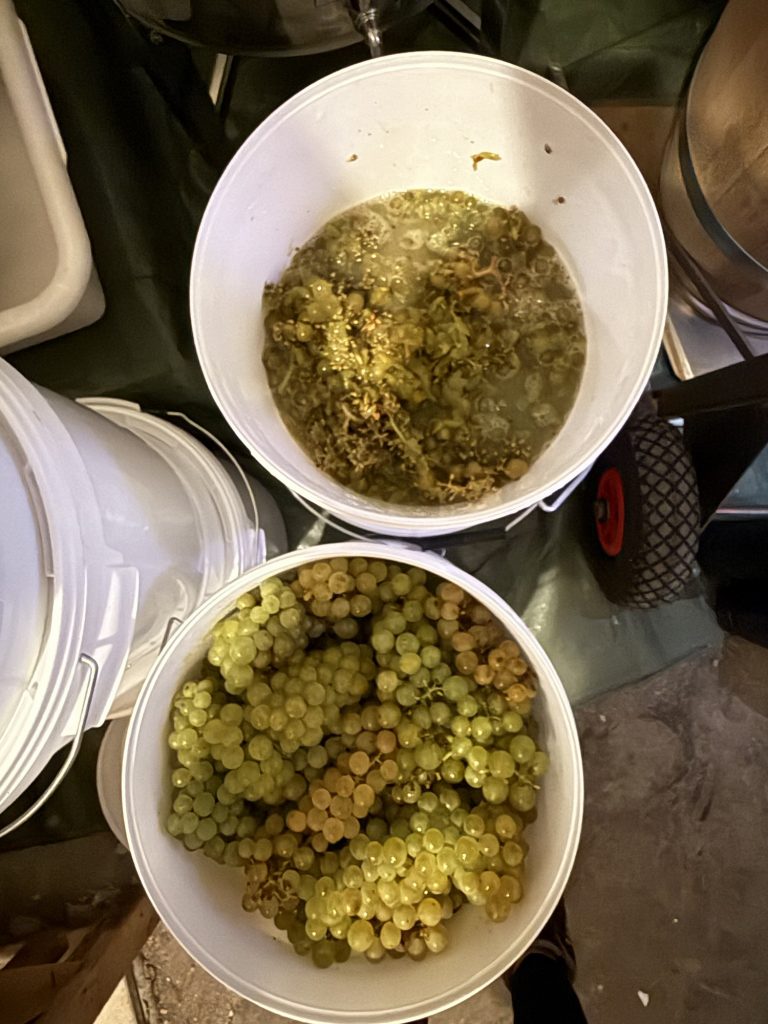
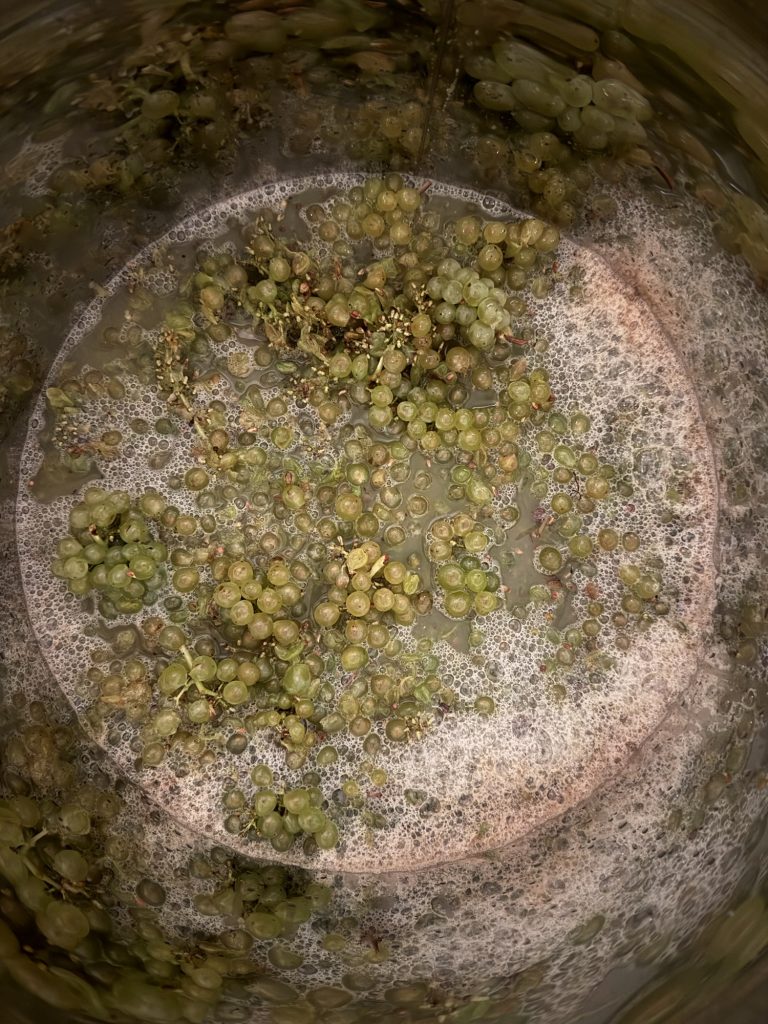
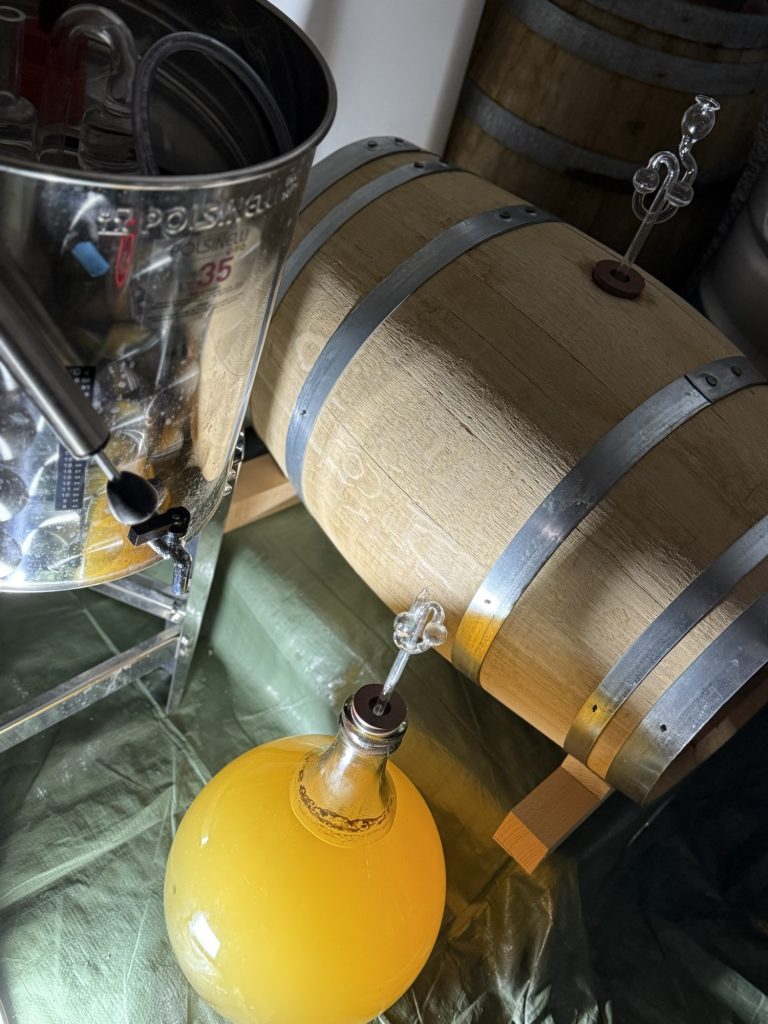
We put the hand-crushed grapes into tank, closed it loosely. Another long day ended with an experiment in the cellar.
For the following 6 days I punched the grapes down every day, and pressed them on the following weekend. They had developed a slightly brown color, but only on the top, and some beautiful fermentation aromas.
While my friends and neighbors worked out the press and how to best operate it, I ran up and down the stairs to the backyard, carrying buckets full of fermenting grape skins and juice up from the basement. Once I came up they had finally found the trick and one of my friends yelled „Che bello!! Che bello!“ out of excitement about the press working nicely. It was hilarious. Why did he say that?! He is neither Italian nor has close ties to Italy-it just burst out. I knew I had a name for the wine.
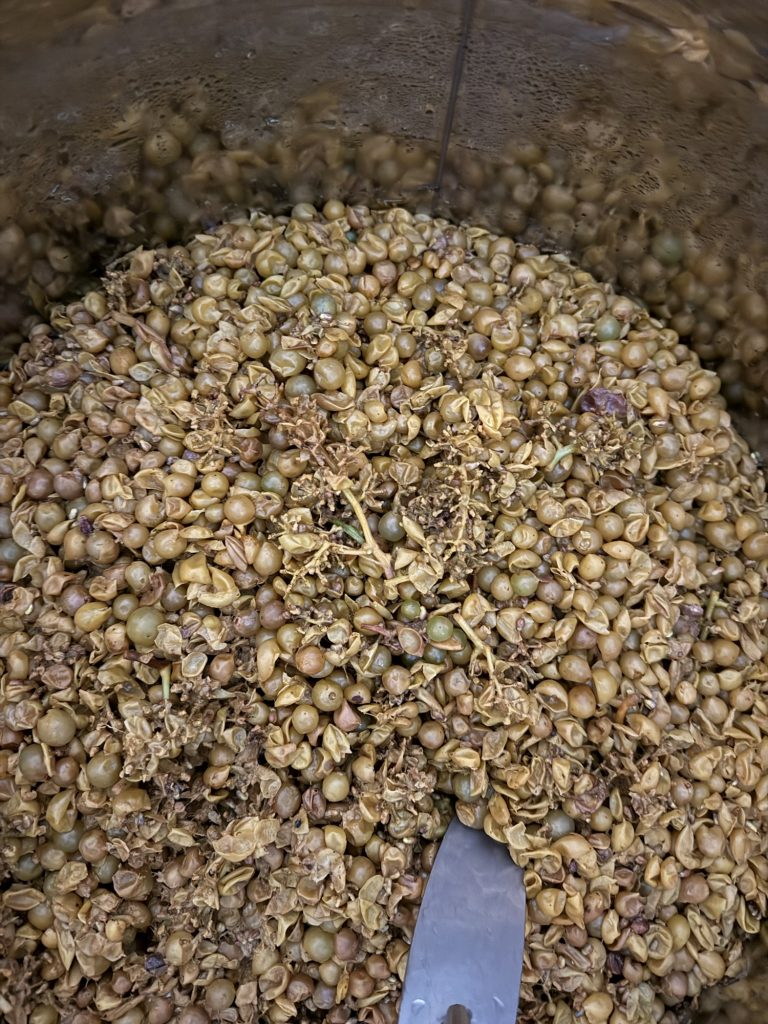
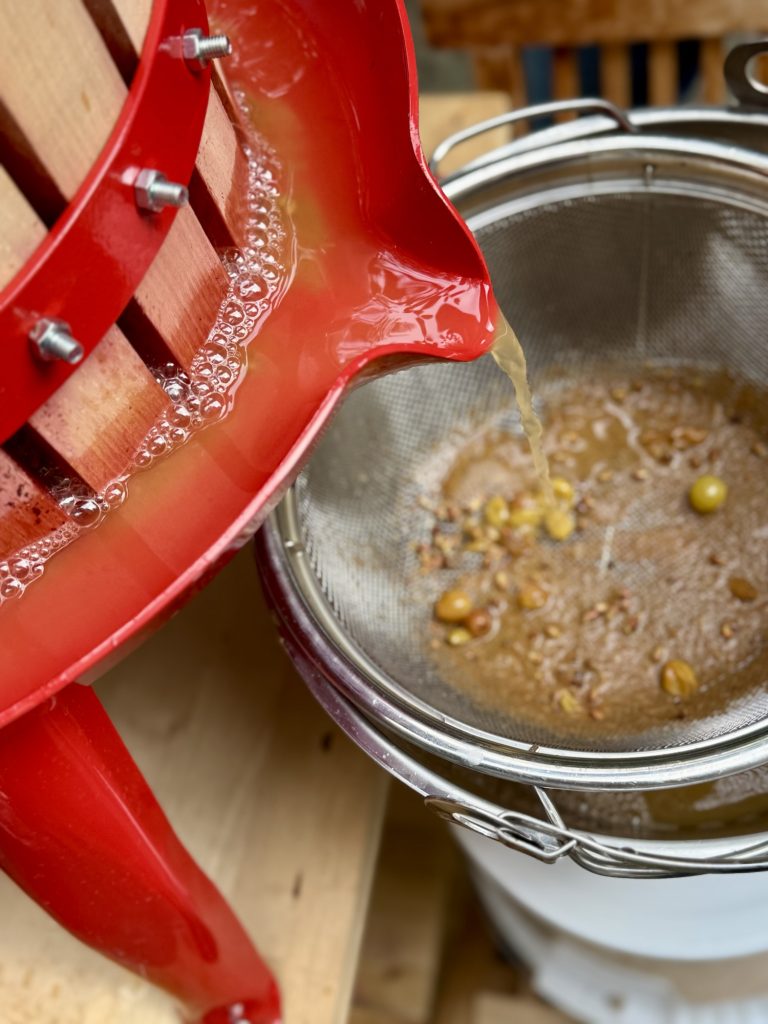
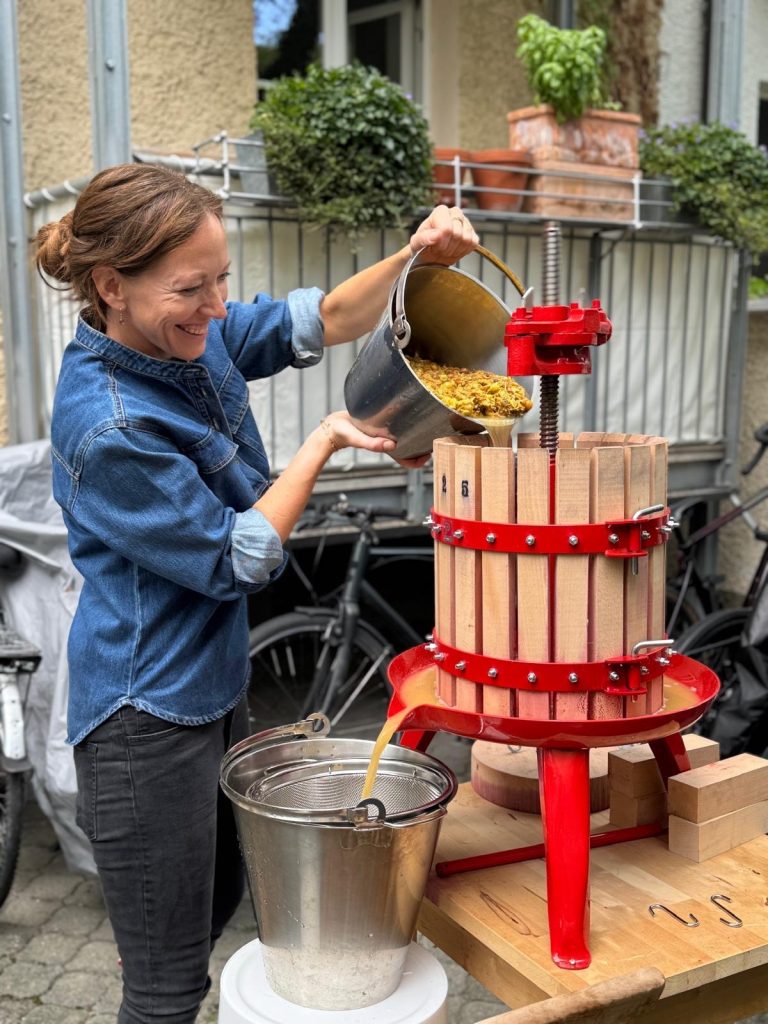
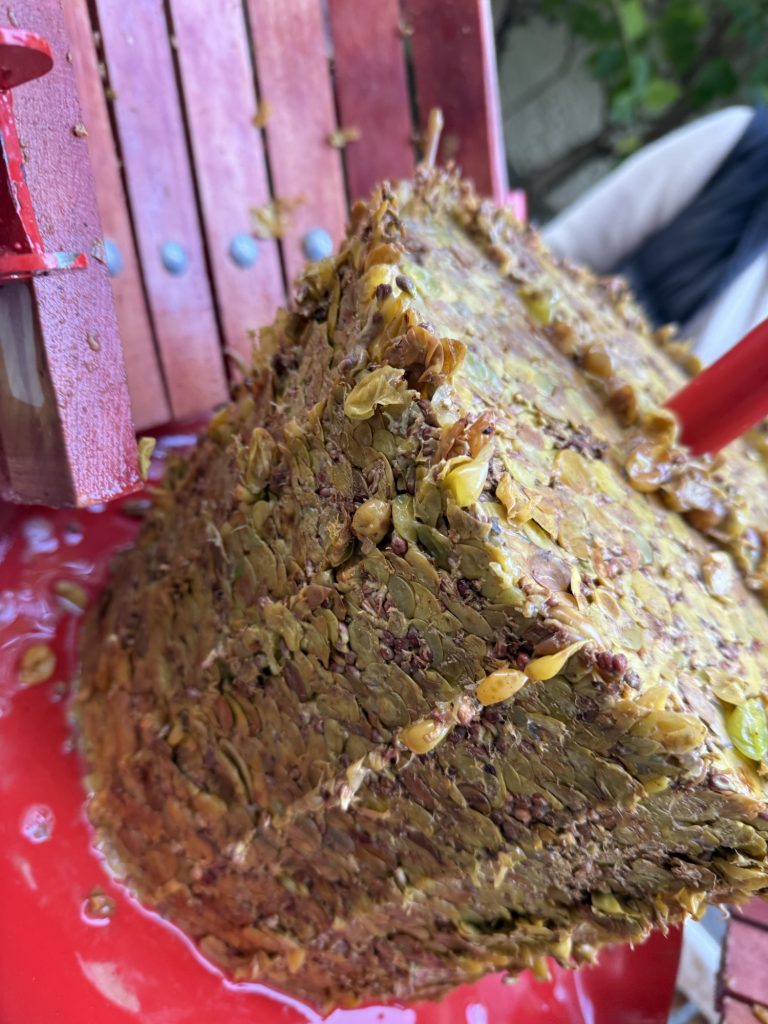
I put the must directly into my small wooden barrel. Closed it tightly with a fermentation bung and crossed my fingers for a steady fermentation.
I can tell so much for now: I didn’t manage to get the barrel completely full. I luckily got some fermenting Riesling must to top it up-thank you, Clemens!
The data after 2 months shows a nicely developing wine with low volatile acidity of 0,36g/L.
While the barrel has been losing wine to evaporation (Angels‘ tears) and I didn’t want to top it up with the still fermenting Riesling, I decided to give it a bit of sulfur, just to be on the safer side.
When will it be ready?