When I attended a masterclass by renowned Styrian winemakers at Karakterre 2025 in Eisenstadt, the talks were all about “wine that is alive”.
Maria and Sepp Muster, Andreas and Elisabeth Tscheppe, Roland Tauss, Franz and Christine Strohmeier and Ewald and Brigitte Tscheppe of Werlitsch who make hard-to-get low-intervention wine in Styria, talked about being “guardians of the land“ and that through their wines they want to convey vitality to people and generations to come. That’s their conviction for growing wine and all cellar work-they aim to bottle wines that are alive.
It can mean many things, and above all, that they do not want to mute or standardize their wines, but rather work with what nature and the season give them.
More info on their community of wine makers that are friends and business makers as a team https://www.schmeckedasleben.com
In 2024, I walked into a winebar and shop in Perth (Western Australia) and started talking to Tom. We had a lovely conversation and I was stunned that he knew everything that’s going on in the specific branch of “the industry”. We talked about the hot topics at La Dive (a wine fair that takes place in early spring in the Loire valley in France-the place to be), who to visit in Burgundy, the missing visibility of top German wines in Australia besides some super well-known ones. And we talked about the missing knowledge about how the product, wine, is actually made. Which ingredients it can have and how it can be designed.
Most wine drinkers do not know about natural wines, or low intervention wines. They might know a bit about organic. They might understand that no systemic herbicides and pesticides are used in the vineyard for organic winemaking, and they might have heard about biodynamic practices along moon phases.
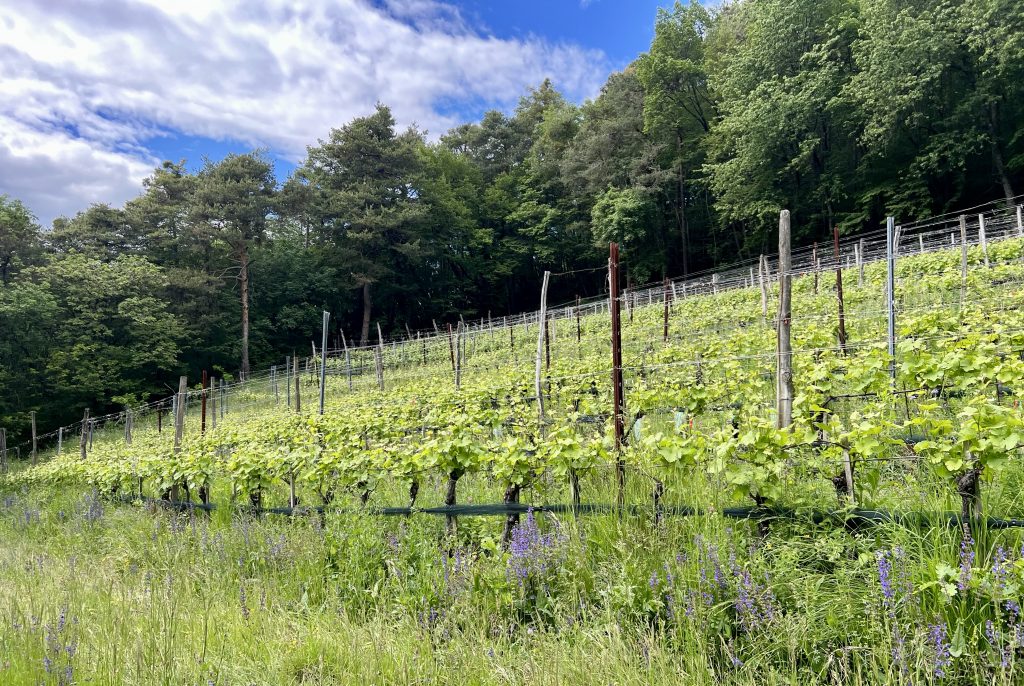
Yet, the romantic misconception that wine is made from grapes and grapes only, is an established concept.
Jamie Goode wrote in 2017 (!) that the natural wine movement is unstoppable. The article is a super read and focuses on the still-valid essence of what natural wine actually is: nothing added to it, nothing taken away. Just grapes. What else anyway? vinepair.com/articles/natural-wine-train
It sounds so simple, but it does mean no yeast added for fermentation, no fining or clarifying agents, no filtration, no acid, no other balancing additives or nutrients to keep the yeast happy.
Also, no sulfur added, or only tiny doses that keep the wine stabile after bottling, while it will probably travel along sunny, warm roads to get to those who will enjoy it then.
Comparing extremes:
In conventional wines, maximum levels of SO₂ are 150mg/L for reds, and 200mg/L for white wines (even higher in the US)!
Natural and low-intervention aims for less than 30mg/L.
But do we want natural wine to only be about SO₂?
It goes without saying that conscious farming and super healthy fruit are a precondition for good natural wine.
While the natural wine train is running full speed as special wine fairs pop up all across the globe and dedicated restaurants and bars present themselves with a selection of natural wines (and usually fresh and well-crafted organic food), the industry is also experiencing significantly dropping demands, and it seems to dissolve into a more flexible approach. Karakterre is moving away from a „natural only“ label https://karakterre.com, winemakers stretch their craft to ensure stable wine rather than being super dogmatic. And natural wines pop up on restaurant menus among conventional wines.
Rajat Parr said to me recently when I asked about his view that more important than the terminology, it‘s just like working in a kitchen, and it will always be valued if the work in the kitchen is clean and organized, focusing on good ingredients.
Now, many return (or advance?) to describing winemaking as low-intervention, handcraft-focused.
There are some standards and labelling options available like S.A.N.S. („Sans Additifs, Ni Sulfites“), respekt biodyn, VinNatur, AVN Association des Vins Naturels, …but it‘s not a universally regulated market, and orientation especially for the consumer isn’t easy. So best is to know how your wine is made and to talk to the people behind.
My friend Patrick who makes wine in the city center of Antwerp, sees it as a trap to be stuck to a „no-intervention“ mindset. It‘s important to create a good and stabile wine-that you yourself, and customers like to drink. Everything else is not a realistic business in the long run.
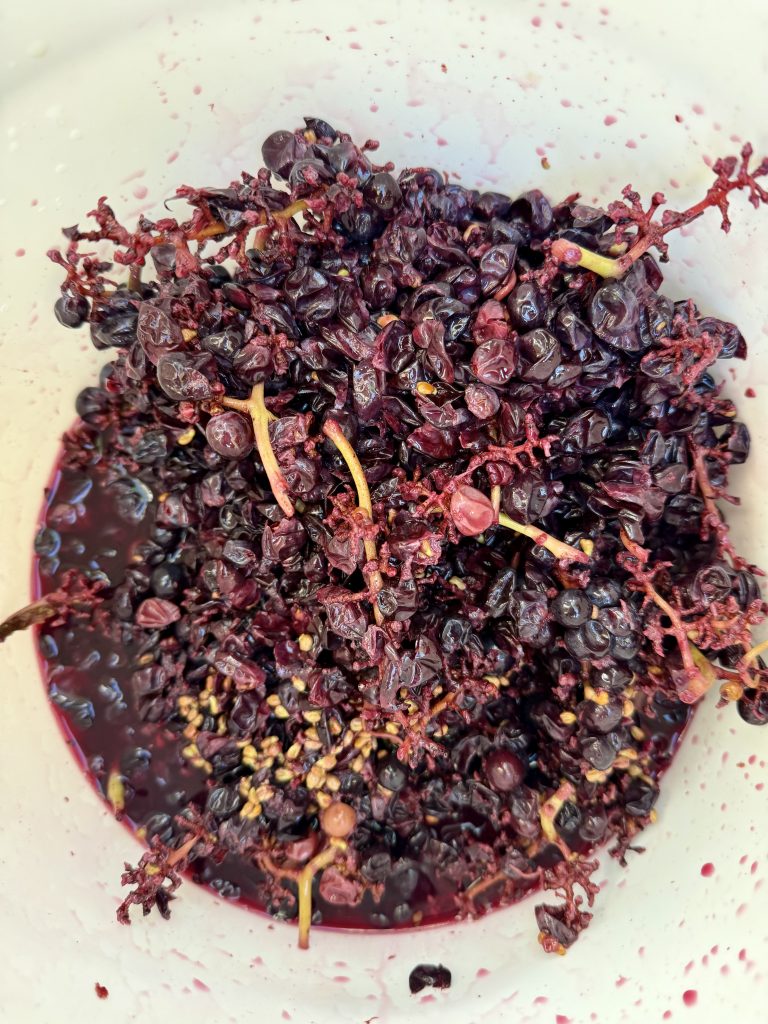
Whereas almost nothing might be added when making natural wines, there are approx. 70 different additives or agents allowed in a conventional wine. Wouldn’t you want to know what’s in your food, too? Conscious consumption does not end on the plate, but it goes on with what you drink (and how much, of course!).
Often, as natural or low-intervention wines are unfiltered, and not clarified nor fined, whites might be darker than conventional ones, sometimes hazy or cloudy.
Their aromas often remind of must, herbs, spices, fruit and less standard. Natural wines can be a bit more likely to be faulty as they are not exposed to huge amounts of the number one preservative: SO₂. They require extra care and depend on ultra-healthy fruit and good cellar work.
For me, faults are tricky and I don’t want them in my glass. But defining what a fault actually is-that‘s a topic for another time.
It all comes back to lively, interesting and carefully made wines from grapes only.